Square-corner cabinet
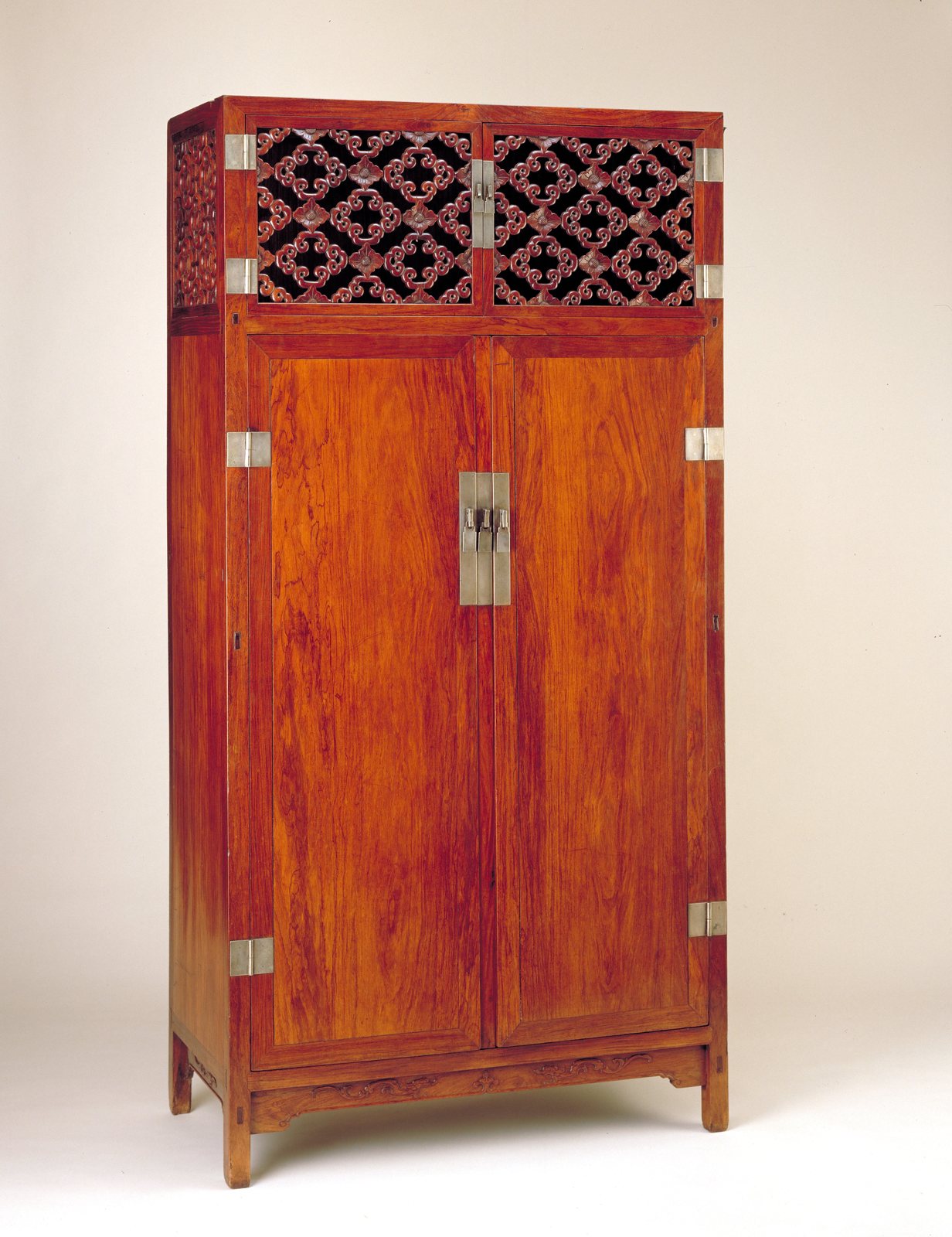
A square-corner cabinet (方角柜) has no projecting cap: its doors hang on metal hinges fixed to the legs, so the top corners can be square. Wang Shixiang notes that these top corners mostly use the zongjiao joint.
1Top corners
Leg and the two top-frame members meet in a three-way mitre: from every side only a diagonal shows.
2Doors and sides
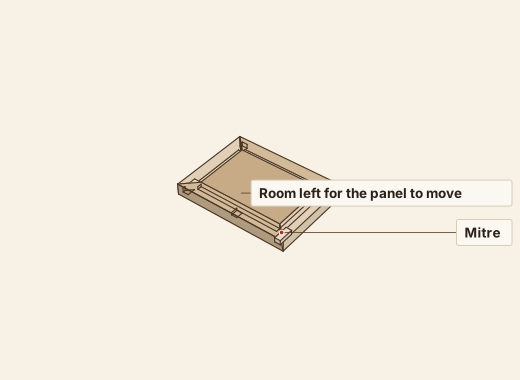
Mitred frames with a groove inside and a floating panel.
Frame and Floating Panel (攒边打槽装板)
A mitred frame grooved on the inside, a thin panel with a tongued edge floating in the groove, and battens underneath.
Explore the joint →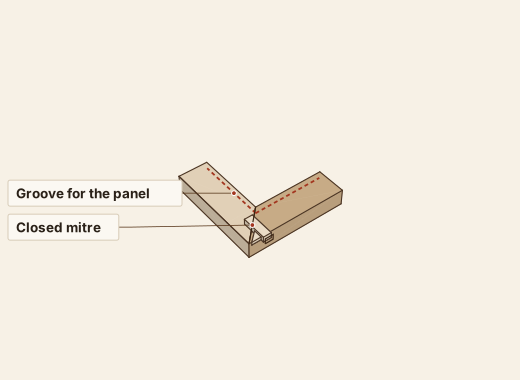
Mitred Frame Joint (格角榫)
The 45° corner of every Chinese frame-and-panel top: a tenon through the end plus a little triangular tongue.
Explore the joint →3Panels
Wide panels are edge-joined and held flat with battens; door panels of one fine cabinet in Wang’s collection have three battens.
Longfeng Board Joint (龙凤榫)
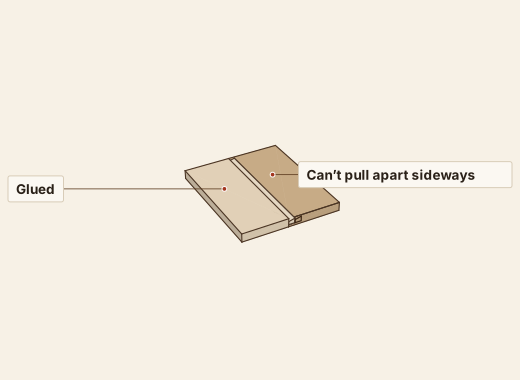
A half-dovetail tongue on one board slides into a matching groove in the next, so the seam can neither step nor pull apart.
Explore the joint →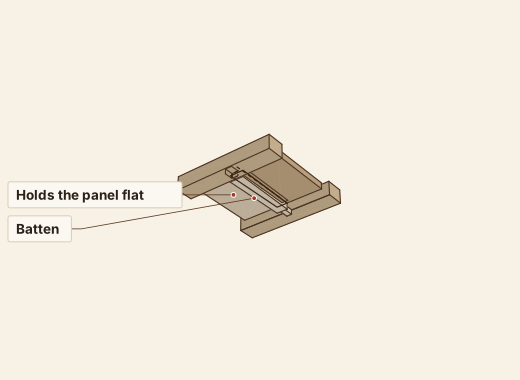
Sliding Dovetail Batten (穿带)
A tapered dovetail batten driven across the back of a panel, its ends tenoned into the frame: the reason old tabletops stay flat.
Explore the joint →4Rails into the legs
Rails meet the legs at T-joints, mitred where the faces run flush.
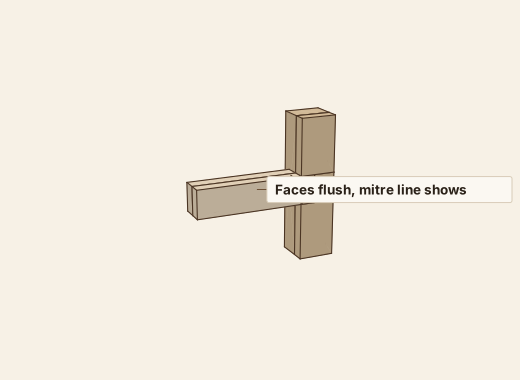
Mitred-Shoulder Joint (格肩榫)
Where a rail meets a post, its outer face is cut to a point that fits a matching notch, so mouldings meet cleanly.
Explore the joint →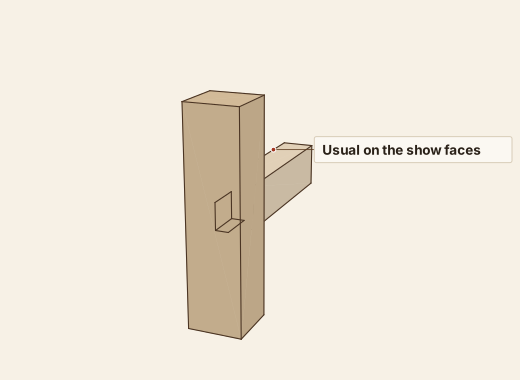
Blind Tenon (半榫)
The tenon stops inside the post, so nothing shows on the outside: neat, a little less strong than a through tenon.
Explore the joint →5Base stretchers
Front and side stretchers meet each leg at the same height, so their tenons are cut “big in, small out” to pass each other.
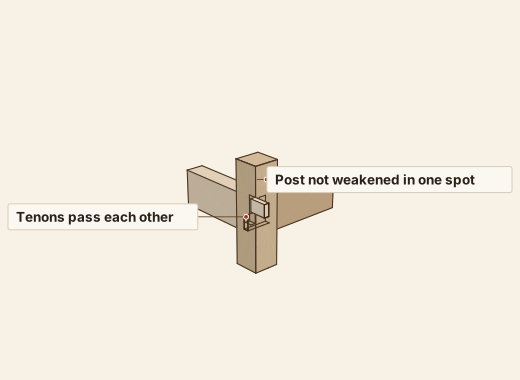
Big-In, Small-Out Tenon (大进小出榫)
Part blind, part through: a big tenon enters, a small one shows. It lets two stretchers share a leg without weakening it.
Explore the joint →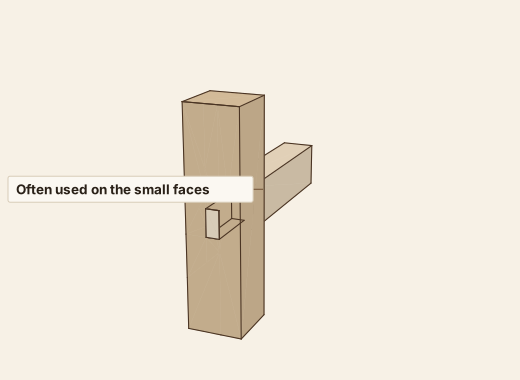
Through Tenon (透榫)
The tenon runs right through and its end grain shows on the far side: strong, but less neat than a blind tenon.
Explore the joint →