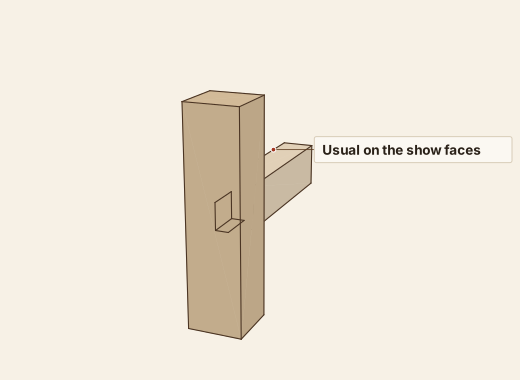
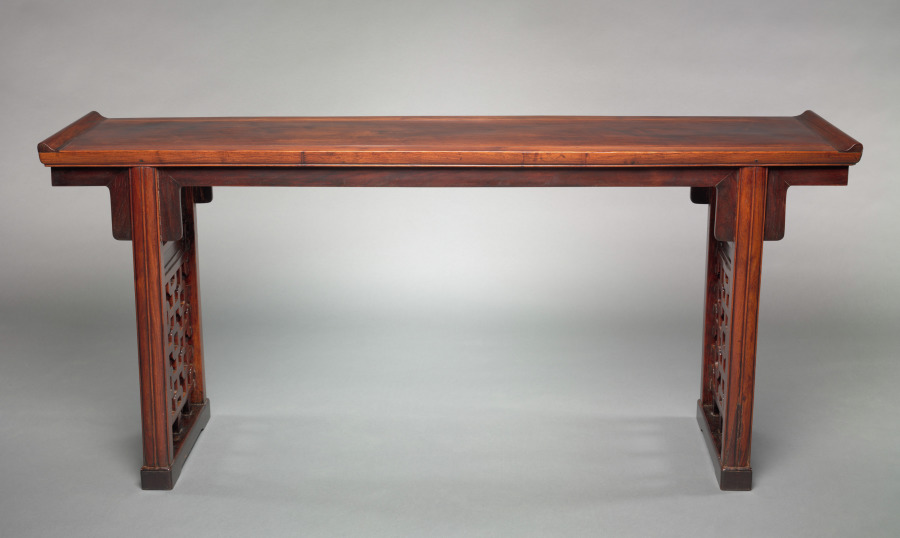
Recessed-leg table
On an an (案) the legs are set in from the ends of the top rather than at the corners. That calls for different joints at the leg tops.
1Top
A grooved, mitred frame with a floating panel and battens, or a thick single board.
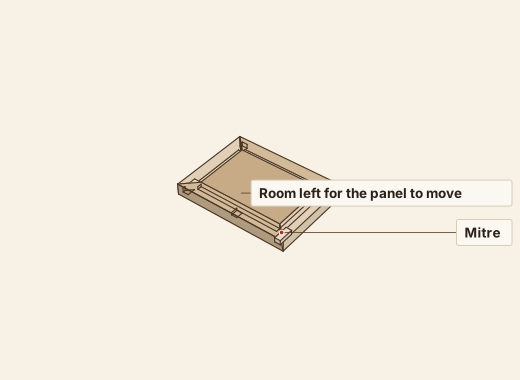
Frame and Floating Panel (攒边打槽装板)
A mitred frame grooved on the inside, a thin panel with a tongued edge floating in the groove, and battens underneath.
Explore the joint →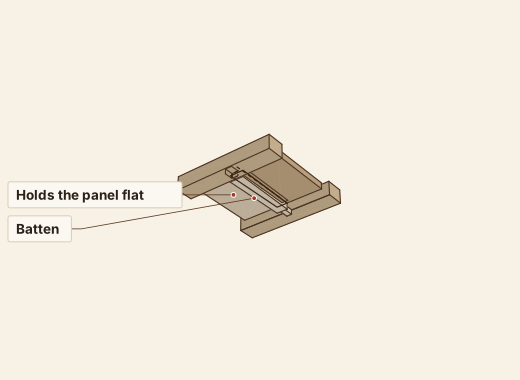
Sliding Dovetail Batten (穿带)
A tapered dovetail batten driven across the back of a panel, its ends tenoned into the frame: the reason old tabletops stay flat.
Explore the joint →2Thick-board ends
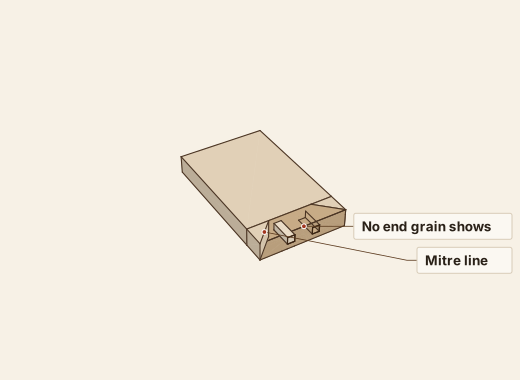
Thick single-board tops get a mitred, tenoned end strip to hide the end grain.
3Leg tops and aprons
The leg is slotted to clamp the apron and spandrels (jiatou), or its face is cut to receive a notched apron (chajian).
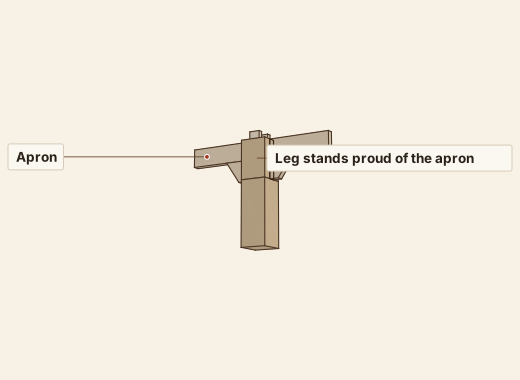
Elongated Bridle Joint (夹头榫)
The leg top is slotted to clamp the apron and its spandrel heads, then tenons into the top.
Explore the joint →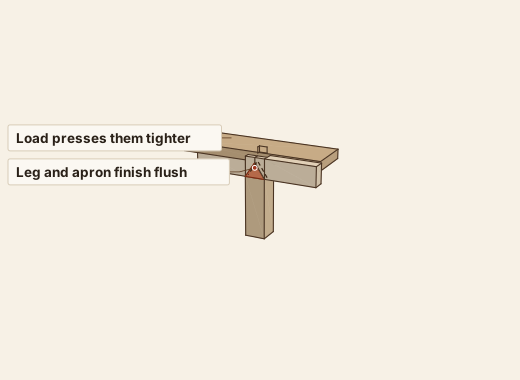
Inserted-Shoulder Joint (插肩榫)
The leg is cut to a pointed shoulder that the grooved apron straddles, finishing flush; the heavier the top, the tighter it grips.
Explore the joint →4Leg into the top
Tenons on the leg tops go into blind mortises under the top.