Cuanbian Dacao Zhuangban: The Frame-and-Panel Method Behind Chinese Tabletops
Cuanbian · Frame-and-panel · 攒边
Almost every Chinese tabletop, cabinet door and cabinet side is built the same way: a strong frame, and a thin panel that floats inside it.
The method is called cuanbian dacao zhuangban: assemble the edges (攒边), cut a groove (打槽), fit the panel (装板). It saves precious wood and lets the panel move with the seasons without splitting.
- Chinese
- 攒边打槽装板 · cuánbiān dǎcáo zhuāngbǎn
- Joins
- Frame members and panel
- Found in
- Tabletops, cabinet doors, cabinet sides, seat frames
- Signature parts
- Mitred frame · groove · panel tongue (边簧) · battens
- Works with
- Gejiao mitre, battens
How it works
The frame
Two long sides (大边) and two ends (抹头) are joined at the corners with mitred tenons, so only a diagonal shows on top. The long sides carry the mortises, the ends the tenons.
Groove and tongue
A groove runs round the inside of the frame. The panel’s edges are thinned to a tongue, called 边簧, that sits in the groove.
Floating, not glued
The panel goes in without glue or nails and isn’t jammed tight, so it can swell and shrink with the weather. Battens slid into dovetail housings under the panel hold it flat, and their ends tenon into the long sides.
How it's made
 Step 1
Groove the long sides
Cut the groove along the inner edge of the long sides, and the mortises for the ends.
 Step 2
Tenon the ends
Mitre the ends and cut their tenons.
 Step 3
Tongue the panel
Thin the panel’s edges to a tongue all round.
 Step 4
Add the battens
Battens under the panel, their ends tenoned into the long sides.
 Step 5
Set the panel in
The panel tongue goes into the groove, without glue.
 Step 6
Leave room to move
The panel can move with the seasons; only a mitre shows at each corner.
Variations
Panel under a water-stop lip
Some tops have a raised lip round the frame with the panel set below it.
Seat frames
Chair seats use the same frame, with a woven soft seat instead of a panel.
In museum collections
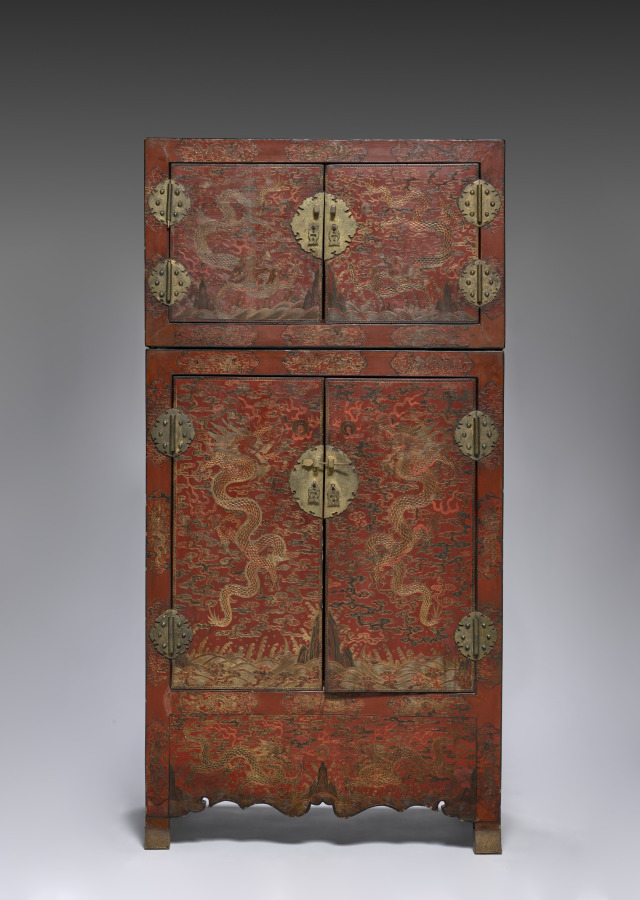
Cleveland Museum of Art
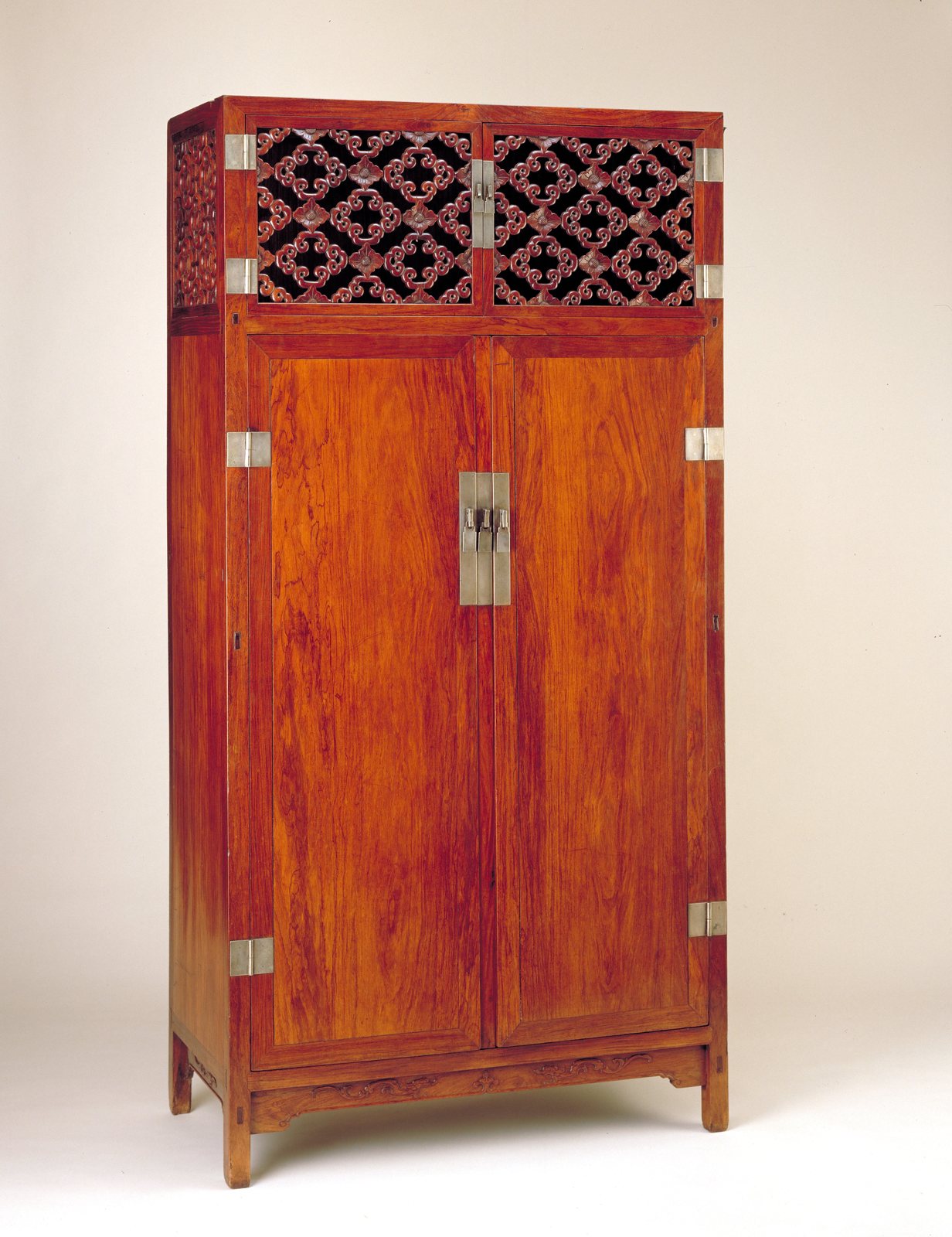
Minneapolis Institute of Art
Related joints
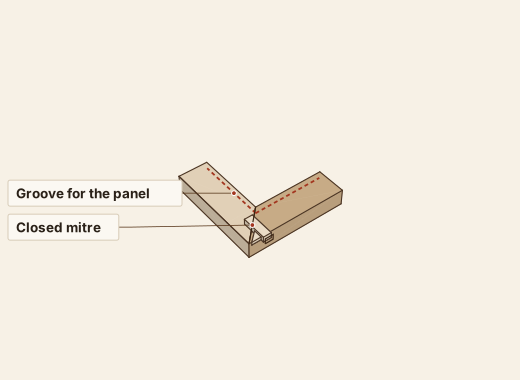
Mitred Frame Joint (格角榫)
The 45° corner of every Chinese frame-and-panel top: a tenon through the end plus a little triangular tongue.
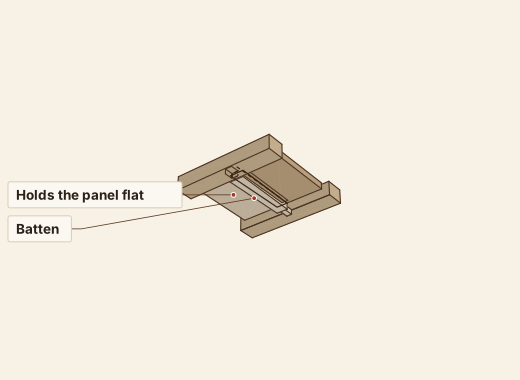
Sliding Dovetail Batten (穿带)
A tapered dovetail batten driven across the back of a panel, its ends tenoned into the frame: the reason old tabletops stay flat.
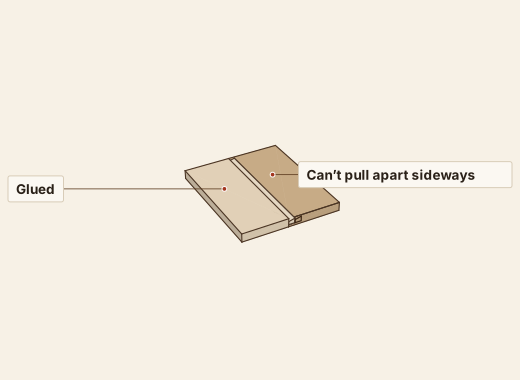
Longfeng Board Joint (龙凤榫)
A half-dovetail tongue on one board slides into a matching groove in the next, so the seam can neither step nor pull apart.
Questions
What is cuanbian?
A Chinese frame-and-panel construction: a mitred frame grooved on the inside, holding a floating panel with a tongued edge.
Why isn’t the panel glued?
So it can swell and shrink with humidity without cracking.
What holds the panel flat?
Dovetailed battens under the panel, tenoned into the long sides.