Chajian Sun (插肩榫): The Flush-Shouldered Leg Joint of Chinese Tables
Chajian sun
Some Ming tables look as if the leg grows up into the apron: a pointed arch of leg wood rises into the apron and the two surfaces run perfectly flush.
That is the chajian sun, the inserted-shoulder joint. Structurally it is a cousin of the jiatou joint, but the leg and apron clasp each other, and the more weight the top carries, the tighter they lock.
- Chinese
- 插肩榫 · chājiān sǔn
- Joins
- Leg, apron and top
- Found in
- Recessed-leg tables and long tables
- Signature parts
- V-shaped shoulder on the leg · matching groove in the apron
- Look
- Leg and apron flush
How it works
Same bones as the jiatou
The leg still tenons into the top, and its upper part is still slotted to clamp the apron.
The shoulder
The difference is on the outside face. The leg’s upper front is pared to a pointed, sloping shoulder, and the apron is grooved where it crosses the leg to the same size and depth. When they come together the apron straddles the shoulder and the two faces finish flush.
Tighter under load
The leg clamps the apron and the apron clamps the leg. The more weight the top puts on the apron, the harder they bear on each other, so nothing can shift sideways or front to back. Because leg and apron flow into each other, makers could also run carved outlines and mouldings round the junction.
How it's made
 Step 1
Shape the shoulder
Pare the upper part of the leg’s front face to a pointed, sloping shoulder.
 Step 2
Slot and tenon the leg
Slot the leg top for the apron and leave a tenon for the table top.
 Step 3
Groove the apron
Cut a groove in the apron where it meets the leg, the same size and depth as the shoulder.
 Step 4
Drop the apron on
Lower the apron into the slot so it straddles the shoulder.
 Step 5
Set the top on
Fit the top over the leg tenon.
 Step 6
Check it’s flush
The leg and apron should finish in one flush surface.
Variations
Separate spandrel heads
A rarer form makes the apron and spandrel heads as separate pieces.
With a hanging pin
A variant hooks the apron onto a pin on the leg from behind.
In museum collections
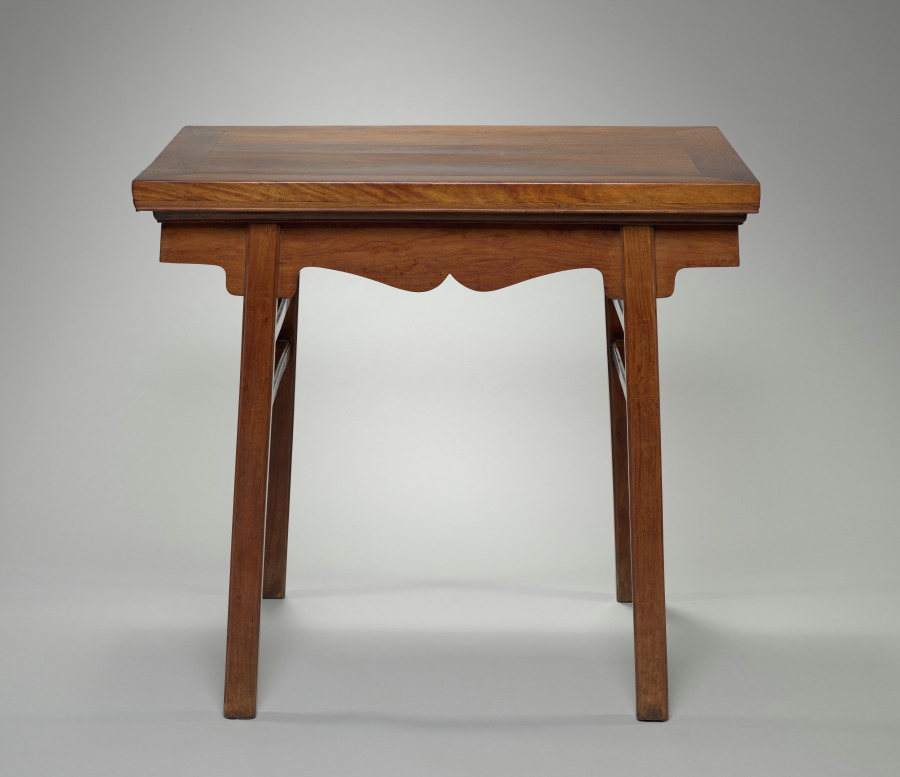
Cleveland Museum of Art
Related joints
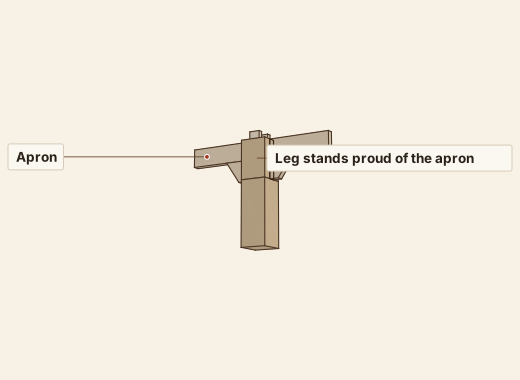
Elongated Bridle Joint (夹头榫)
The leg top is slotted to clamp the apron and its spandrel heads, then tenons into the top.
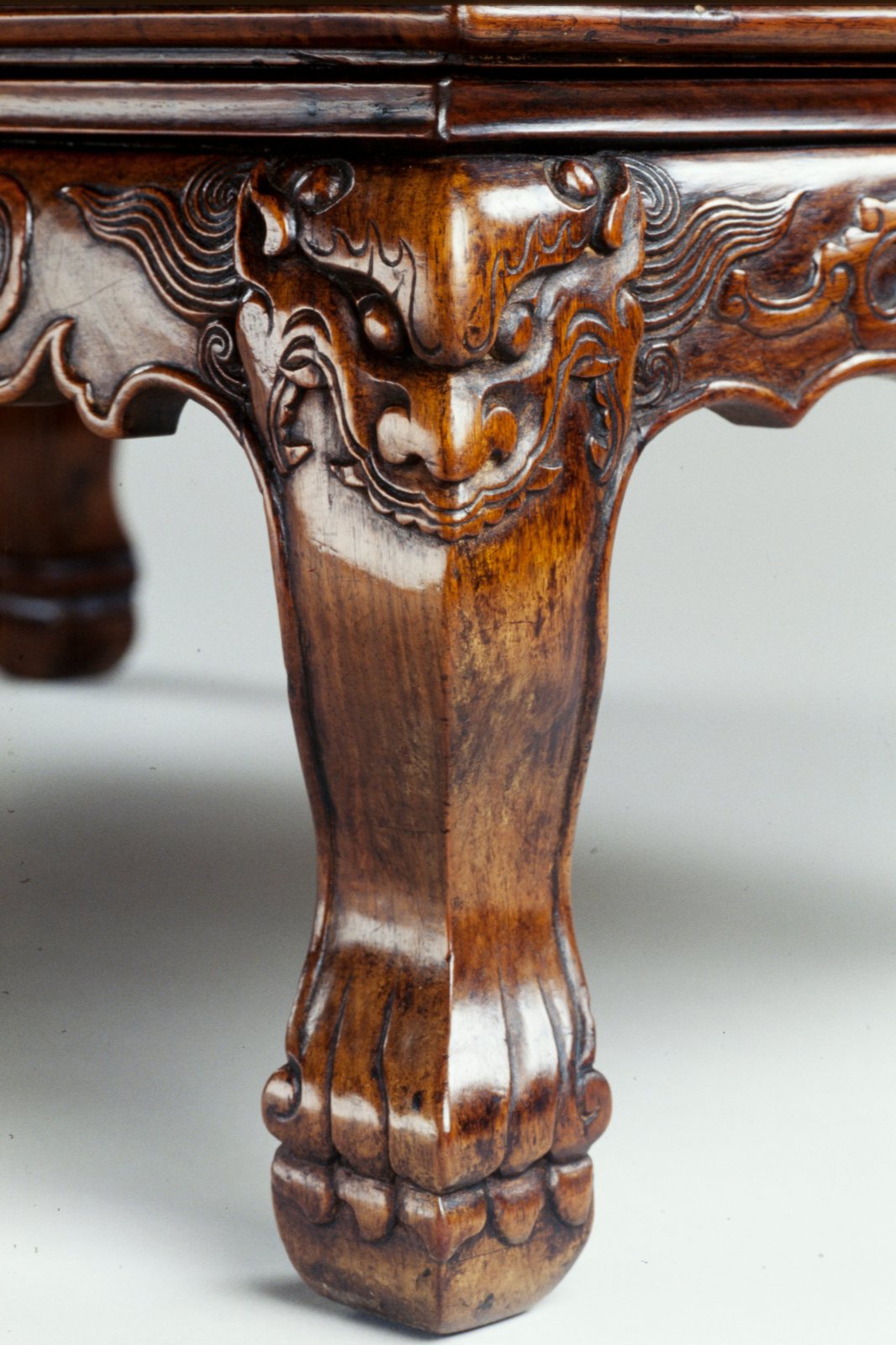
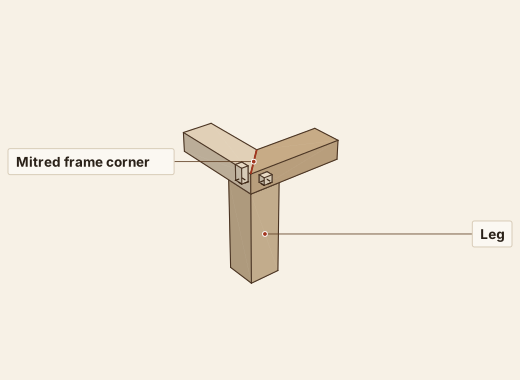
Baojian Joint (抱肩榫)
The hidden lock behind every waisted Ming table corner: a mitred shoulder, a triangular tenon and a tapered pin.
Long-and-Short Tenons (长短榫)
Two tenons at right angles on the top of a leg: a long one for the long side, a short one for the end.
Questions
What is a chajian joint?
A leg-to-top joint on Chinese tables where the leg’s front is cut to a pointed shoulder that fits a matching groove in the apron, so the two finish flush.
Chajian or jiatou: how can I tell?
If the leg stands proud of the apron, it’s a jiatou. If the leg rises flush into the apron in a pointed shape, it’s a chajian.
Why does it get tighter under load?
Leg and apron clamp each other at the sloping shoulder, so weight from the top presses them harder together.