Baojian Joint (抱肩榫): How the Ming Waisted-Leg Joint Works
Shoulder-embracing joint · Guaxiao sun 挂销榫 (Suzhou name)
Run your eye down the corner of a Ming waisted stool and you see a single clean seam. The apron flows into the leg as if both were cut from one block, and the recessed waist above them looks like a shadow line.
That calm surface hides one of the cleverest joints in Chinese furniture. The baojian sun, the shoulder-embracing joint, brings the leg, the waist and two aprons together at one corner. A 45° shoulder locates them, a triangular tenon keys them in, and a tapered hanging pin pulls the apron tight against the leg as it slides home.
- Chinese
- 抱肩榫 · bàojiān sǔn
- Also called
- 挂销榫 in Suzhou workshops
- Joins
- Leg, waist and apron, plus the top
- Found in
- Waisted stools, square tables, side tables, kang tables
- Signature parts
- 45° shoulder · triangular tenon · hanging pin
- Goes together
- Apron drops in from above; top goes on last
How it works
The waist problem
On a waisted (有束腰) table, a recessed band called the waist sits between the top and the apron. At each corner the leg has to meet the top, the waist and two aprons, and on the outside it all has to read as one surface.
The shoulder and the triangular tenon
Below the waist, the leg's outer corner is cut back to a 45° mitred shoulder, and a triangular mortise is cut into it. Each apron ends in a matching 45° mitre carrying a triangular tenon. Pushed together, the mitres close into a crisp corner and the apron sits flush with the leg.
The hanging pin: the clever part
Many pieces add a vertical hanging pin (挂销) on the leg's shoulder. It is narrow at the top and wide at the bottom, with a half-dovetail section, and it hooks into a slot in the back of the apron. Because the apron is hung on from above, the taper draws it tighter the further it goes, and the dovetail section stops it pulling away from the leg. Craftsmen add a subtle detail: the top of the pin should lean slightly inward, never outward.
Into the top
The leg finishes in two tenons, one long and one short. They enter mortises in the top frame, cut deeper in the long side and shallower in the end so they don't clash with the frame's own joinery.
How it's made
 Step 1
Mark the shoulder and mortise
On the leg, mark where the waist zone ends, the 45° shoulder lines on the two outside faces, and the triangular mortise in the shoulder.
 Step 2
Mark the hanging pin
If the pin is left on the leg, lay it out on the shoulder: narrow at the top, wide at the bottom.
Tip Check which way the pin leans before you cut. Leaning outward opens the joint.
 Step 3
Cut back the outer corner
Remove the leg's outer corner down to the shoulder, leaving the pin standing, then cut the triangular mortise.
 Step 4
Shape the apron end
Cut the 45° mitre and the triangular tenon at the end of the apron, and the slot in its back face that will take the pin.
 Step 5
Hang the apron
Lower the apron from above so the slot slides down over the pin and the tenon drops into its mortise. Pare until the mitre closes flush.
 Step 6
Fit the top
Fit the long and short tenons on the leg top to the mortises in the top frame, then set the top in place.
Variations
With or without a pin
Some pieces carry the hanging pin; others rely on the triangular tenon alone. The pin can be left on the leg or fitted separately.
One-piece or two-piece waist
The waist can be cut from the same board as the apron (假两上) or made as a separate strip (真两上). Wang Shixiang judged the one-piece version sounder, though it uses more timber.
With a tray moulding
Grander pieces add a moulded strip (托腮) between waist and apron, giving the 'three-tier' forms.
Later shortcuts
From the mid-Qing the pin was often dropped and the waist made separately; by the late Qing some corners relied on glue alone.
In museum collections
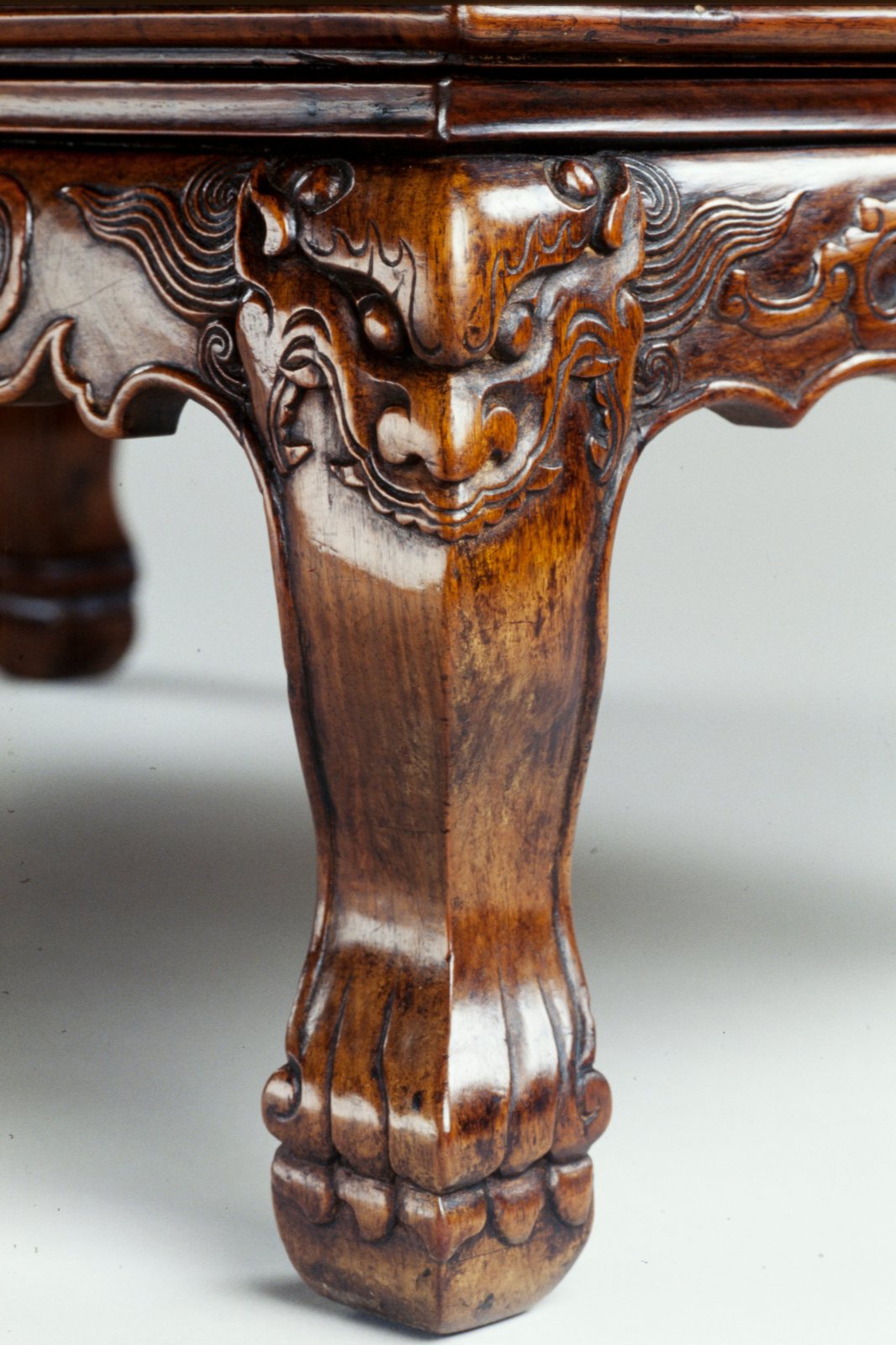
Minneapolis Institute of Art
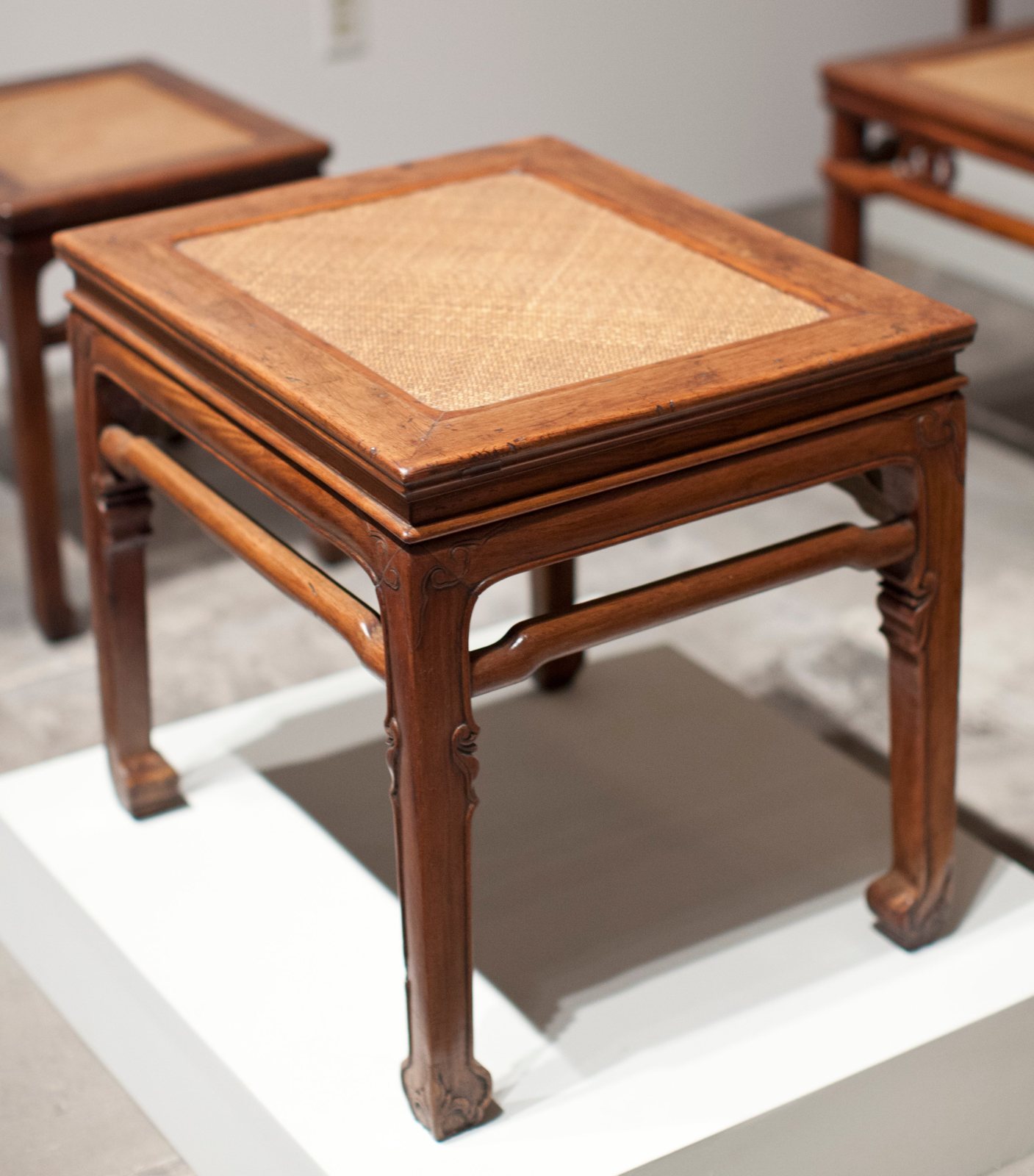
Minneapolis Institute of Art
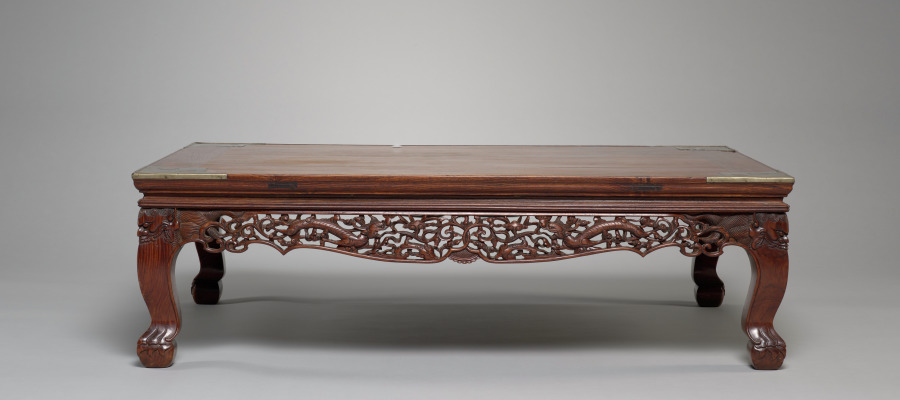
Cleveland Museum of Art
Related joints
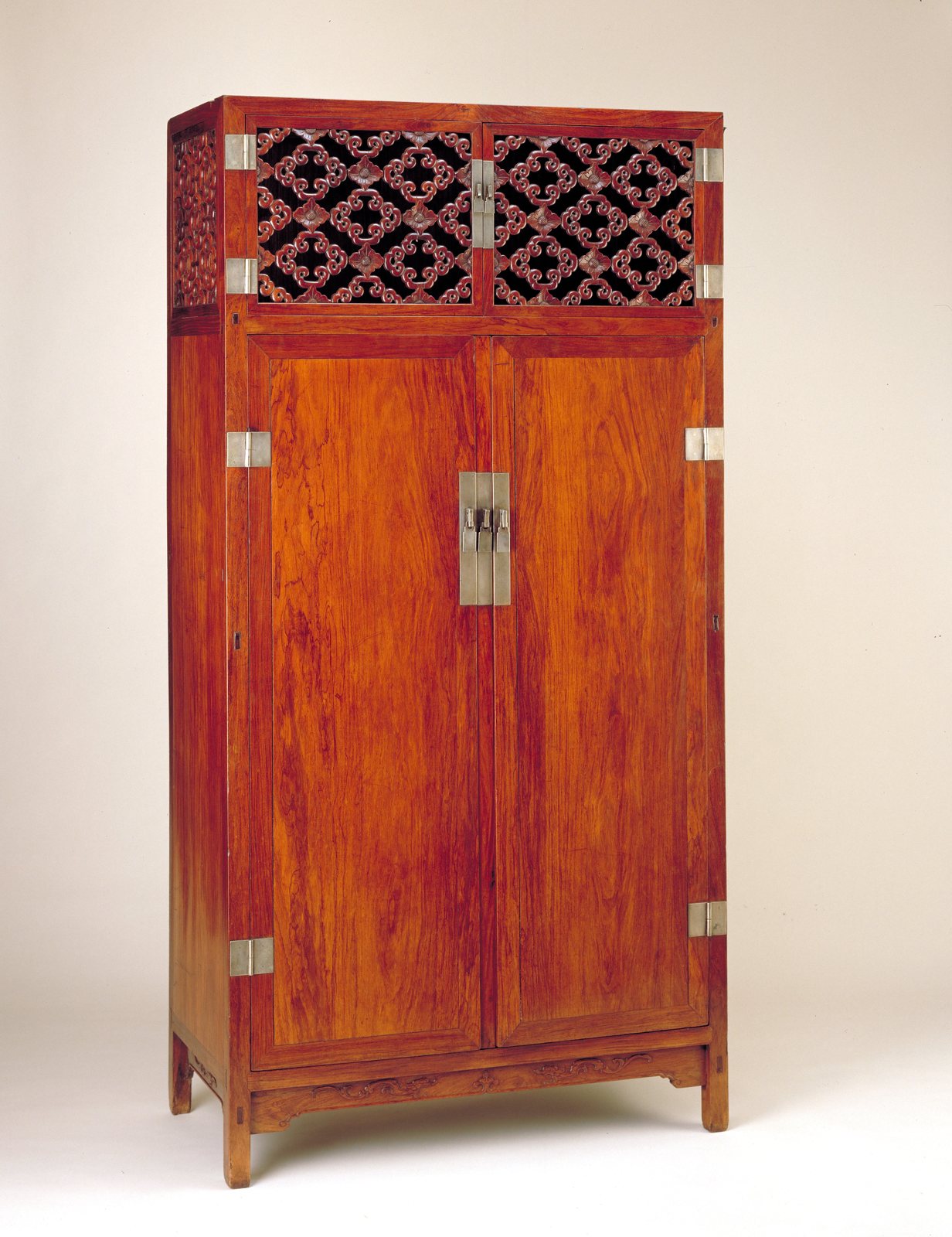
Questions
What is a baojian joint?
The baojian sun (抱肩榫, 'shoulder-embracing joint') is the corner joint of waisted Chinese furniture. It joins the leg, the waist and the aprons with a 45° mitred shoulder, a triangular tenon and, often, a tapered hanging pin on the leg.
Why does the apron go on from above?
The hanging pin is narrow at the top and wide at the bottom, so the slot in the back of the apron can only slide down over it. As it goes down the fit gets tighter.
Does every baojian joint have a hanging pin?
No. Some pieces have one and some don't, and many later Qing pieces left it out.
How is it different from the three-way mitre (粽角榫)?
The baojian joint belongs to waisted furniture, where the apron sits below a recessed waist. The zongjiao joint brings the leg and the two top-frame members flush together at the very corner of the top.
What size should the parts be?
There is no fixed formula. Makers sized the leg, waist and apron to suit each piece, so a sturdy square table and a slender kang table look quite different. As a rule, the apron and waist read as lighter bands above a stronger leg, and the mitre must close cleanly on the outside faces. Study a few museum pieces of the type you want to build and take your proportions from them.