Mantou Sun (馒头榫): The Column-Head Tenon of Chinese Timber Buildings
Mantou sun · Bun tenon
In a Chinese timber building, a heavy beam sits directly on top of each column. What stops it from sliding?
A small block on the column head, named after a steamed bun: the mantou sun.
- Chinese
- 馒头榫 · mántou sǔn
- Joins
- Column head (or king post) to beam
- Found in
- Timber-frame halls, pavilions, houses
- Size
- About 1/4–3/10 of the column diameter, slightly tapered
How it works
A short square tenon
The top of the column (or a king post) is cut to a short square tenon, its length, width and thickness about a quarter to three-tenths of the column diameter, slightly tapered with the top edges eased.
Into the beam
It goes into a socket (海眼) cut in the underside of the beam. The beam’s weight holds it down; the tenon stops it sliding sideways.
How it's made
 Step 1
Cut the tenon
Cut a short square tenon on the column head.
 Step 2
Size
About 1/4–3/10 of the column diameter.
 Step 3
Socket the beam
Cut a socket in the underside of the beam.
 Step 4
Lower the beam
Lower the beam onto the column.
 Step 5
Located
The tenon stops the beam sliding.
 Step 6
Hidden
Once in place it can’t be seen.
Variations
On king posts
The same tenon tops king posts (瓜柱) under ridge beams.
Related joints
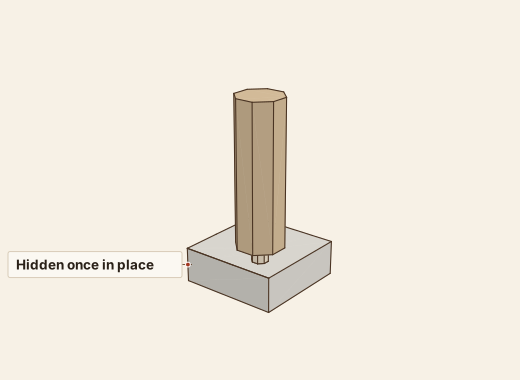
Column-Foot Tenon (管脚榫)
A short round tenon at the column foot drops into a socket in the stone base, so the column can’t shift.
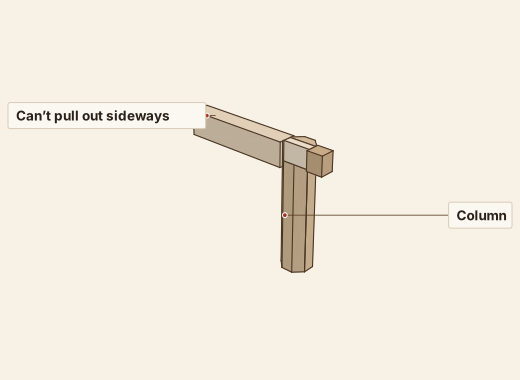
Clasping-Head Tenon (箍头榫)
The beam drops into a slot across the column head and runs on past it; the head beyond “clasps” the column.
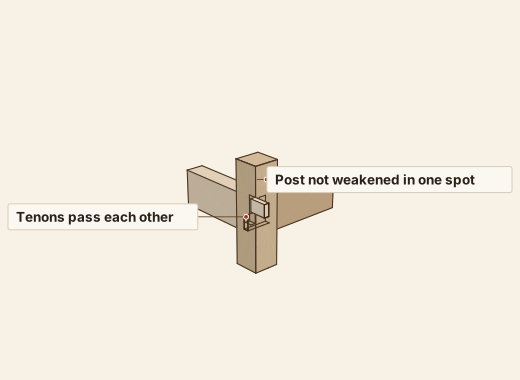
Big-In, Small-Out Tenon (大进小出榫)
Part blind, part through: a big tenon enters, a small one shows. It lets two stretchers share a leg without weakening it.
Questions
What is a mantou tenon?
A short square tenon on a column head fitting a socket under the beam.
How big is it?
Traditionally about 1/4–3/10 of the column diameter.
Why the name?
Its short, rounded-off block shape is likened to a steamed bun.