Guanjiao Sun (管脚榫): The Column-Foot Tenon of Chinese Timber Buildings
Guanjiao sun · Column-foot tenon
Chinese timber columns usually stand on a stone base rather than in the ground. A small tenon at the foot keeps each one in place.
It is the guanjiao sun, literally the tenon that “manages the foot”.
- Chinese
- 管脚榫 · guǎnjiǎo sǔn
- Joins
- Column foot to stone base
- Found in
- Timber-frame buildings
- Size
- About a third of the column diameter
How it works
A short round tenon
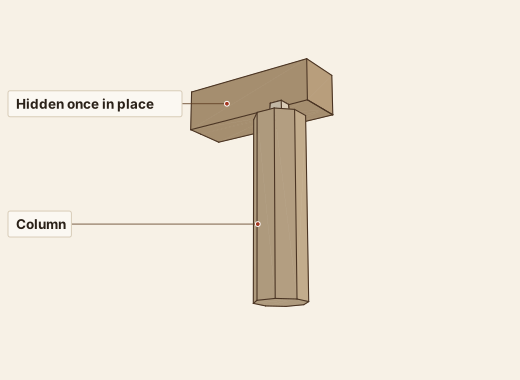
The foot of the column is cut to a short round tenon, about a third of the column diameter.
Into the base stone
It drops into a socket (海眼) cut in the top of the stone base (柱顶石). The column’s weight keeps it down and the tenon stops the foot sliding.
Through-base version
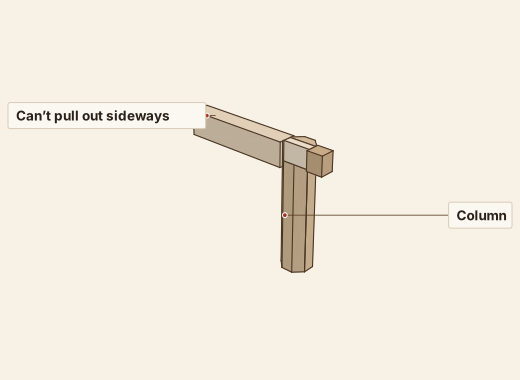
Where columns need extra anchoring, a much longer square tenon (套顶榫) passes through the base stone into the foundation below.
How it's made
 Step 1
Cut the tenon
Cut a short round tenon on the column foot.
 Step 2
Size
About a third of the column diameter.
 Step 3
Socket the stone
Cut a socket in the base stone.
 Step 4
Set the column
Lower the column onto the stone.
 Step 5
Located
The tenon stops the foot shifting.
 Step 6
Hidden
Once in place it can’t be seen.
Variations
Through-base tenon (套顶榫)
A long square tenon through the base stone into the foundation, for columns that need more anchoring.
Related joints
Questions
What is a guanjiao tenon?
A short tenon at a column foot fitting a socket in the stone base.
How big is it?
About a third of the column diameter.
Is the column buried?
No, it stands on the stone; the tenon only keeps it from sliding.