Guotui Cheng (裹腿枨): The Wrap-Around Stretcher That Imitates Bamboo
Guotui cheng · 裹脚枨
Some Ming stools and tables look as if they were made of bamboo: the stretcher seems to bend around each leg in one piece.
It doesn’t bend. The guotui cheng, the wrap-around stretcher, is two straight stretchers that stand proud of the leg and meet in a mitre at the corner.
- Chinese
- 裹腿枨 · guǒtuǐ chéng
- Also called
- 裹脚枨
- Joins
- Two stretchers to a leg at a corner
- Found in
- Round-legged stools and tables; occasionally square legs with the arrises taken off
- Signature parts
- Proud stretchers · corner mitre · inner tenon
How it works
Proud, not flush
The stretchers stand out from the leg surface and meet at the corner, so from outside they look like one bamboo stick wrapped around the leg.
Pared square
Where they meet the leg, a short section of the round leg is pared square so the stretchers can sit against it.
Mitre outside, tenon inside
The outer face of each stretcher end is cut to 45° to meet its neighbour. The inner part is left as a tenon that goes into a mortise in the leg.
How it's made
 Step 1
Pare the leg
Pare a short section of the leg square where the stretchers will sit.
 Step 2
Mitre the outer face
Cut the outer face of each stretcher end at 45°.
 Step 3
Leave the tenon
Leave a tenon on the inner part of the stretcher end.
 Step 4
Fit both stretchers
Bring the two stretchers onto the leg.
 Step 5
Close the mitre
Their mitres meet at the corner.
 Step 6
Check the look
The stretchers stand proud of the leg like bent bamboo.
Variations
Tenons meeting in a mitre
Inside the leg the two tenons can meet in a mitre.
Long and short tenons
Or one is long and one short, the short butting the long.
On square legs
Rarer; the leg’s corners are taken off first.
In museum collections
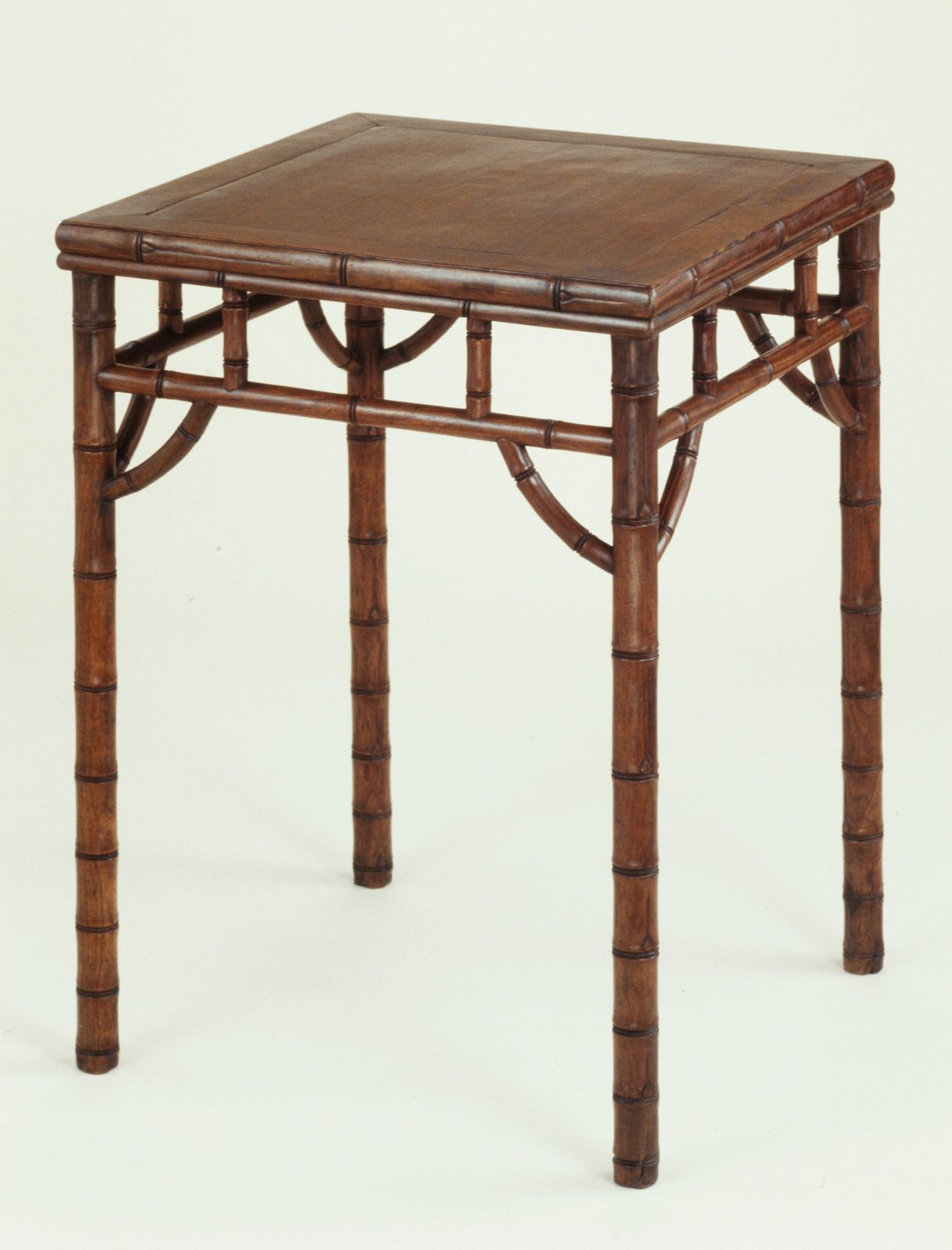
Minneapolis Institute of Art
Related joints
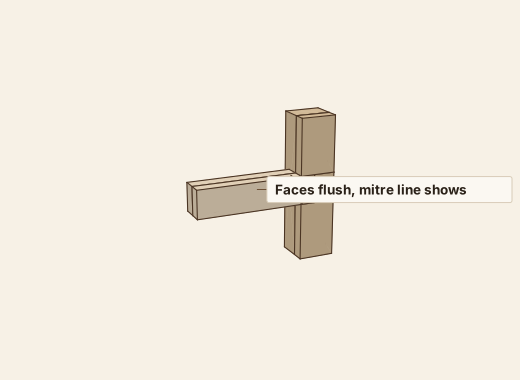
Mitred-Shoulder Joint (格肩榫)
Where a rail meets a post, its outer face is cut to a point that fits a matching notch, so mouldings meet cleanly.
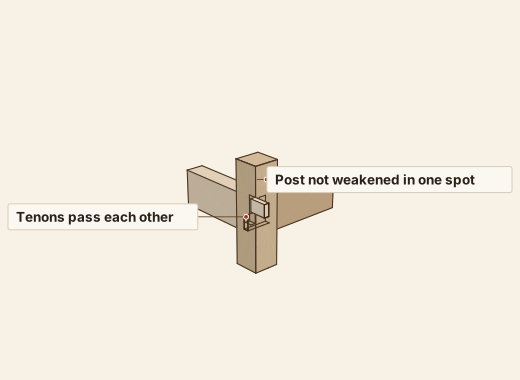
Big-In, Small-Out Tenon (大进小出榫)
Part blind, part through: a big tenon enters, a small one shows. It lets two stretchers share a leg without weakening it.
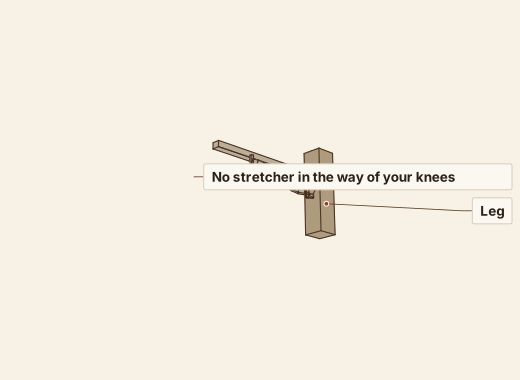
Giant’s-Arm Brace (霸王枨)
An S-curved brace from the leg up to the underside of the top, hooked into the leg and locked with a wedge.
Questions
What is a guotui stretcher?
A stretcher that stands proud of the leg and wraps round the corner, meeting its neighbour in a mitre, in imitation of bent bamboo.
Is it one bent piece?
No. It is two straight pieces mitred at the corner.
How is it fixed?
The outer face is mitred and the inner part carries a tenon into the leg.