Xiujian Yanwei Sun: The Sleeve-Shouldered Dovetail Joining Beams to Columns
Sleeve-shouldered dovetail · 大头榫
Tie beams between columns must not pull apart, even when the frame sways.
The beam ends drop into the columns on dovetails. Many early Ming and Qing buildings add a short collar at the root: the sleeve shoulder.
- Chinese
- 袖肩燕尾榫 · xiùjiān yànwěi sǔn
- Joins
- Tie beam to column
- Found in
- Large Ming and early Qing buildings
- Proportions
- Tenon 3/10 of column diameter long: sleeve 2/5, dovetail 3/5
- Related
- Dovetail
How it works
Dovetail down into the column
The column head has a dovetail socket open at the top. The beam end is cut to a dovetail as tall as the beam and drops in from above, so it can’t pull out sideways.
The sleeve
Beam dovetails come with or without a sleeve shoulder. With one, the tenon is 3/10 of the column diameter long: the sleeve takes 2/5 of that and the dovetail 3/5. The dovetail flares by about 1/10–1.5/10 and tapers slightly from top to bottom; the sleeve does not.
How it's made
 Step 1
Dovetail
Cut a dovetail on the beam end.
 Step 2
Sleeve
Leave a short sleeve shoulder at the root.
 Step 3
Socket
Cut a matching socket, open at the top, in the column.
 Step 4
Drop in
Drop the beam in from above.
 Step 5
Can’t pull out
The dovetail holds the beam.
 Step 6
Sleeve helps
The sleeve adds bearing at the root.
Variations
Without sleeve
A plain dovetail 3/10 of the column diameter, as tall as the beam.
Related joints
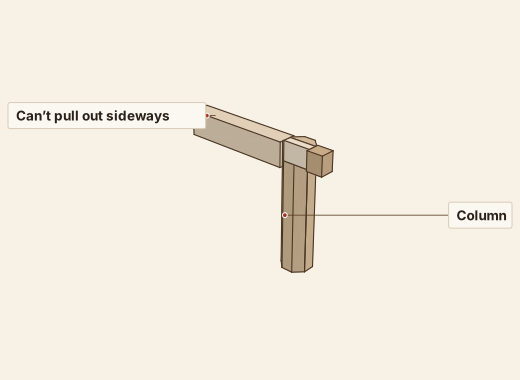
Clasping-Head Tenon (箍头榫)
The beam drops into a slot across the column head and runs on past it; the head beyond “clasps” the column.
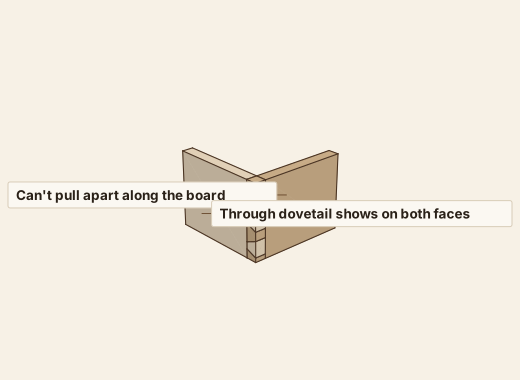
Dovetail Joint (燕尾榫)
A tenon wider at the tip than at the root, so it can’t pull out: found in boxes, drawers, tables and temple beams.
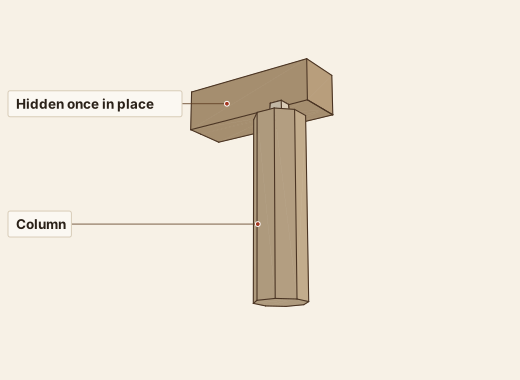
Column-Head Tenon (馒头榫)
A short square tenon on the column head fits a socket under the beam, so the beam can’t slide off.
Questions
What is a sleeve-shouldered dovetail?
A beam-end dovetail with a short collar at the root, dropped into the column head.
How long is the tenon?
3/10 of the column diameter: sleeve 2/5, dovetail 3/5.
Where is it used?
Large Ming and early Qing buildings.