Tuojiao Sun (托角榫): How Chinese Corner Spandrels Are Fixed
Tuojiao sun · Corner spandrel joint
Under the corner of many Chinese tables a small carved bracket, a corner spandrel (角牙), fills the angle between leg and apron. It looks decorative, but it also stiffens the corner.
How it is fixed is the tuojiao sun, the corner-bracket joint. It is not one joint but a small group of them.
- Chinese
- 托角榫 · tuōjiǎo sǔn
- Joins
- Corner spandrel to leg and apron (or top)
- Found in
- Tables, stools, chairs, stands
- Signature parts
- Groove in the leg · tongue on the spandrel · loose tenons (桩头)
- Nature
- A group of joints
How it works
Into the leg
A groove is cut in the leg, and a tongue on the spandrel’s upright edge fits into it.
Into the apron
The spandrel’s top edge and the apron (or the top itself) are both mortised, and loose tenons, called 桩头, are planted between them.
A group, not a single joint
That is why sources call it a combination of joints rather than one form. Wang Shixiang drew several ways of fitting spandrels: grooved on both edges, grooved on one and pinned on the other, or tenoned on one and pinned on the other.
How it's made
 Step 1
Groove the leg
Cut a groove in the leg below the apron.
 Step 2
Tongue the spandrel
Form a tongue on the spandrel edge that meets the leg.
 Step 3
Plant the loose tenon
Mortise the spandrel’s top edge and plant a loose tenon in it.
 Step 4
Mortise the apron
Cut a matching mortise in the underside of the apron.
 Step 5
Fit the spandrel
Slide the spandrel into the corner.
 Step 6
Braced
The spandrel stiffens the corner between leg and apron.
Variations
Grooved both sides
The spandrel sits in grooves in both leg and rail.
Groove and loose tenon
One edge in a groove, the other on loose tenons.
Tenon and loose tenon
One edge tenoned, the other on loose tenons.
In museum collections
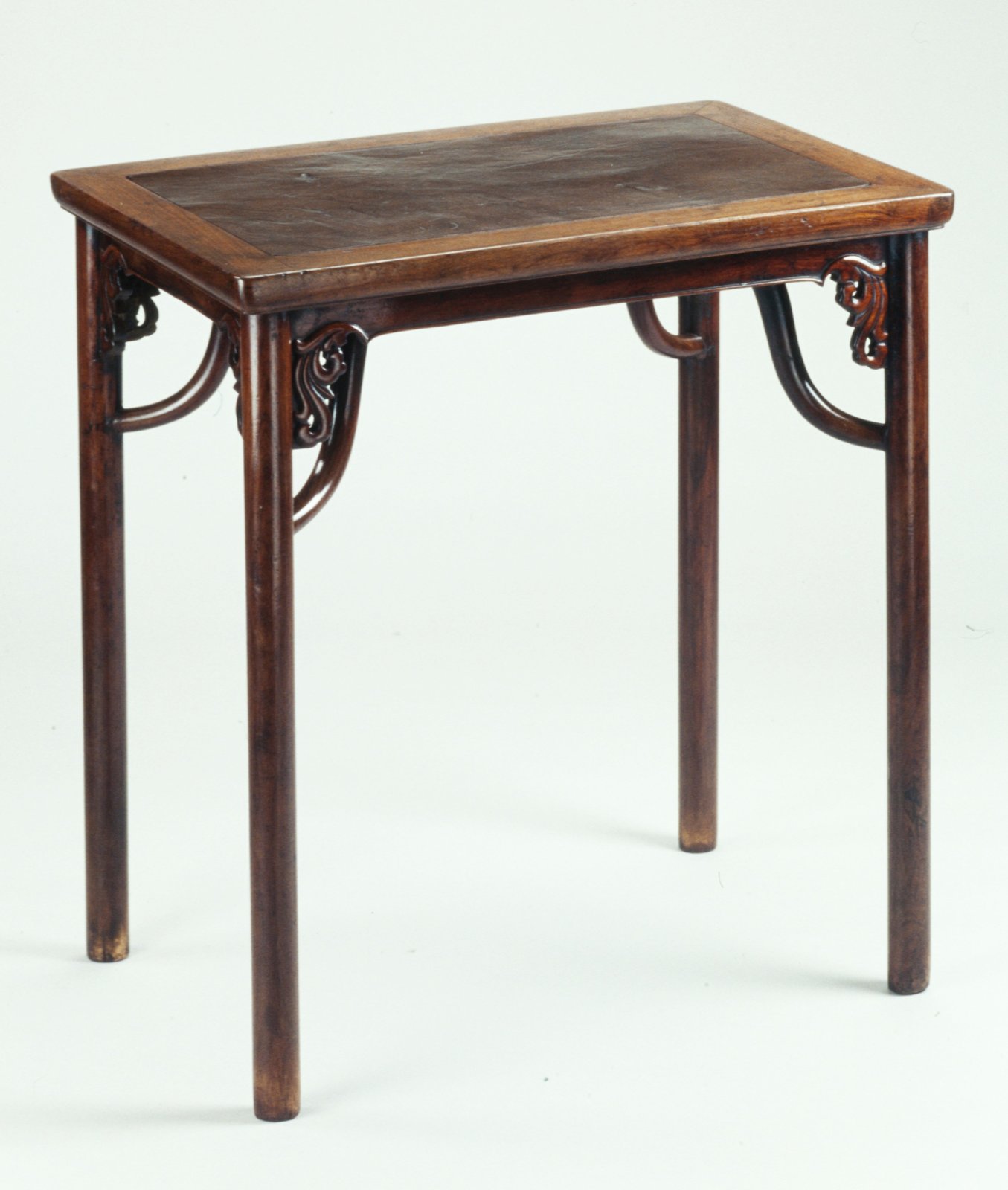
Minneapolis Institute of Art
Related joints
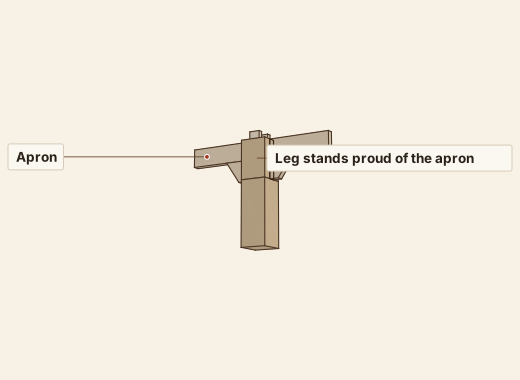
Elongated Bridle Joint (夹头榫)
The leg top is slotted to clamp the apron and its spandrel heads, then tenons into the top.
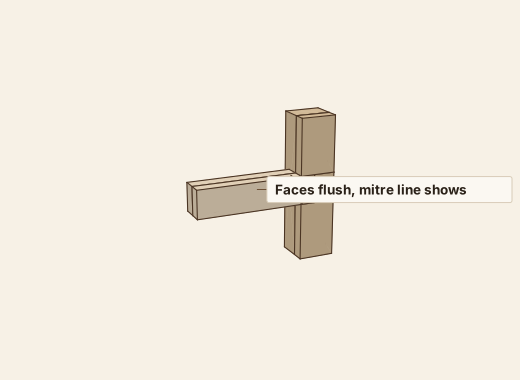
Mitred-Shoulder Joint (格肩榫)
Where a rail meets a post, its outer face is cut to a point that fits a matching notch, so mouldings meet cleanly.
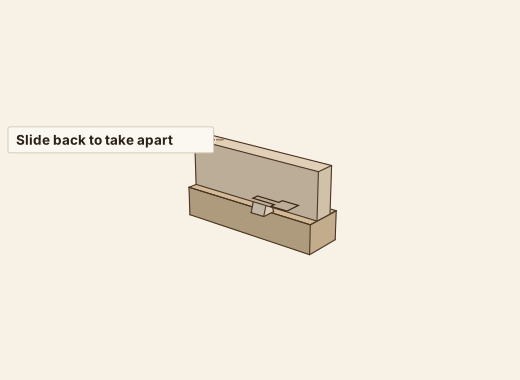
Sliding Locking Key (走马销)
A dovetailed key planted in one part drops into the wide end of a slot and slides to the narrow end to lock.
Questions
What is a tuojiao joint?
The set of joints that fixes a corner spandrel between leg and apron: a tongue into a groove in the leg, and loose tenons into the apron.
Is it decorative or structural?
Both. The spandrel is carved, but it also braces the corner.
Why is it called a group of joints?
Because several separate joints work together to fix one bracket.