Gougua Sun (勾挂榫): The Hooked, Wedged Tenon Behind the Bawang Brace
Hook tenon · 勾挂垫榫
Some Chinese braces have to lock into a leg from one side only, with no way to pin them from outside.
The answer is a tenon that hooks: put in low, pushed up, and wedged so it can never drop back.
- Chinese
- 勾挂榫 · gōuguà sǔn
- Also called
- 勾挂垫榫
- Joins
- Brace or stretcher to leg
- Found in
- The lower end of the bawang brace
- Signature parts
- Right-trapezoid tenon · taller mortise · wedge
How it works
A trapezoid tenon
The tenon and the mortise are both shaped as right trapezoids. The mortise is taller than the tenon root.
In low, push up
Wang Shixiang describes the bawang brace’s lower end: the tenon goes into the wider lower part of the mortise and is pushed up into the narrower upper part, where the sloping faces bear on each other and hook.
Wedge
A wedge is driven into the space left below, so the tenon cannot drop and therefore cannot come out.
How it's made
 Step 1
Trapezoid tenon
Shape the tenon as a right trapezoid.
 Step 2
Taller mortise
Cut a mortise taller than the tenon root.
 Step 3
In low, push up
Insert low, then push up.
 Step 4
Hooked
The sloping faces hook together.
 Step 5
Wedge
Drive a wedge into the gap below.
 Step 6
Locked
It can no longer pull out.
Variations
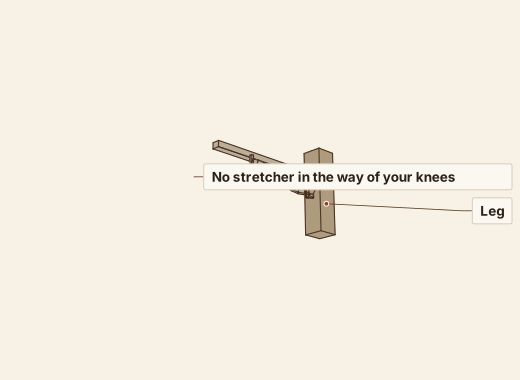
Bawang brace
The best-known use, at the brace’s lower end.
Related joints
Questions
What is a gougua tenon?
A trapezoid tenon that hooks in a taller mortise and is locked by a wedge below.
Where is it used?
Most famously at the lower end of the bawang brace.
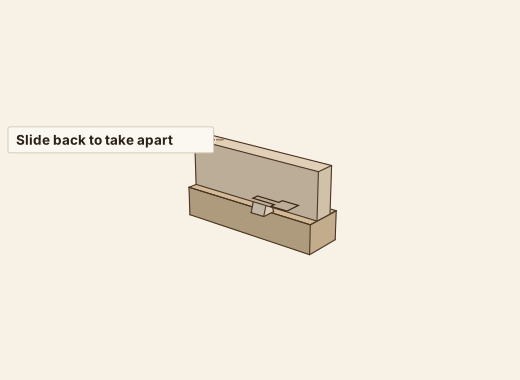
Can it be taken apart?
Only by removing the wedge first.